
1. The Forensic Comparison of Bed Bug Remediation Technologies
Bed bugs (*Cimex lectularius*) are among the most physiologically resilient indoor structural pests in the developed world. Over the past three decades, global bed bug populations have developed massive metabolic and target-site genetic resistance (specifically kdr mutations in voltage-gated sodium channels) to conventional over-the-counter pyrethroid sprays. Spraying standard hardware-store bug sprays merely repels bed bugs, scattering breeding females into adjacent wall voids, electrical conduits, and neighboring apartments.
Successful remediation requires professional trade methodologies that overcome behavioral resistance and penetrate every concealed harborage across all developmental life stages (eggs, 5 nymphal instars, and adults).
| Parameter | Thermal Heat Remediation | Multi-Mode Chemical Tank Mix | Cryonite Freezing |
|---|---|---|---|
| Mode of Eradication | Cellular protein coagulation (Heat) | Neurological & metabolic disruption | Intracellular water crystallization |
| Lethal to Eggs? | Yes (100% lethal at 122°F for 60 mins) | No (Requires 2–3 follow-up cycles) | Yes (If directly sprayed with freeze wand) |
| Number of Visits Needed | 1 single visit (4–8 hour heat hold) | 2 to 3 visits (spaced 10–14 days apart) | 1 to 2 targeted spot visits |
| Average Cost (2-3 Bedroom) | $1,500 – $3,500 | $800 – $1,800 | $600 – $1,400 (Spot treatment) |
| Chemical Residue | Zero chemical residue | Residual active for 30–60 days | Zero chemical residue |
| Preparation Burden | Moderate (Remove meltables/aerosols) | High (Launder, bag, dismantle beds) | Low to Moderate |
Methodology 1: Whole-Structure Thermal Heat Remediation
Thermal remediation is the gold standard single-day treatment for residential bed bug infestations. Industrial electric or diesel-fired high-BTU heating systems, paired with heavy-duty high-velocity axial air movers, circulate superheated air throughout the affected living space.
Thermal Lethal Parameters: Bed bugs and their eggs die when exposed to sustained temperatures between 118°F and 122°F (48°C to 50°C). Professional heat contractors bring the ambient room temperature to 125°F to 140°F and hold it continuously for 4 to 8 hours. Technicians deploy calibrated wireless thermal sensors inside the deepest core areas (center of mattresses, inside wall baseboards, under sofa cushions) to verify lethal heat penetration.
- Key Advantages: 100% eradication of all life stages (including resilient eggs) in a single 8-hour treatment; zero chemical residue on furniture; residents can return the same evening.
- Key Vulnerabilities: Requires removing all heat-sensitive items (candles, vinyl blinds, oil paintings, medications, electronics, pressurized aerosol cans, musical instruments); higher upfront project cost ($1,400–$3,500).
Methodology 2: Multi-Mode Dual-Action Chemical Protocols
When thermal remediation is cost-prohibitive, professional operators deploy a rigorous three-tier chemical tank mix designed to break physiological resistance:
1. Dual-Action Adulticide: Tank-mixing a neonicotinoid (e.g., Dinotefuran or Acetamiprid) with a specialized pyrethroid or pyrrole (Chlorfenapyr / Phantom). Chlorfenapyr uncouples oxidative phosphorylation in insect mitochondria, killing resistant bugs as they move.
2. Insect Growth Regulator (IGR): Pyriproxyfen or Hydroprene disrupts nymphal molting, preventing juvenile bugs from maturing or laying viable eggs.
3. Desiccant Wall-Void Dusting: Applying pharmaceutical-grade Amorphous Silica Dust (CimeXa) inside electrical switch plates, hollow bed frame tubes, and under carpet tack strips. Silica dust removes the insect's protective waxy epicuticle, causing 100% dehydration mortality within 24–48 hours.
- Key Advantages: Significantly lower initial cost ($600–$1,400); residual chemical protection remains active for weeks to intercept newly introduced bugs.
- Key Vulnerabilities: Requires 2 to 3 separate treatment visits spaced exactly 10 to 14 days apart to kill newly hatched nymphs (pesticides cannot penetrate the thick chorion shell of bed bug eggs); extensive homeowner preparation required.
Methodology 3: Cryonite (Liquid CO2 Freezing)
Cryonite rapidly freezes pest insects using a sub-zero snow of recycled liquid carbon dioxide at -110°F (-78.5°C). The extreme freezing crystallizes intracellular water, bursting cell membranes and causing instantaneous physical mortality.
- Best For: Commercial food prep areas, luxury antique furniture, and sensitive electronic equipment where neither high heat nor chemical liquids can be introduced.
- Limitations: Has zero residual activity; any bed bug not hit directly with the frozen CO2 wand survives.
2. The Forensic Home Preparation Checklist
Over 60% of bed bug remediation failures are caused by improper homeowner preparation. Prior to your treatment date, execute this rigorous preparation protocol:
Laundering and Heat-Cycle Protocols
Bed bugs harbor in clothing, bedding, curtains, and linens. Washing alone does not kill bed bugs; high heat in the dryer is mandatory.
- Dryer High-Heat Cycle: Strip all bed sheets, blankets, pillowcases, clothing, and washable drapes. Place them directly into clean plastic bags to transport to the laundry. Run every item in the dryer on High Heat (minimum 120°F–130°F) for at least 30 to 45 minutes.
- Clean Airtight Bagging: Immediately transfer dried items into fresh, heavy-duty clear contractor bags and seal tightly with duct tape. Store clean bags in the bathroom (bathrooms rarely harbor bed bugs) until treatment is complete.
Furniture and Room Clearance
Dismantle bed frames, headboards, and footboards to expose screw holes and corner brackets. Pull all furniture at least 2 feet away from perimeter walls to allow technicians full access to baseboards. Empty closets and dressers, leaving drawers open for chemical or heat penetration.
Certified Encasements
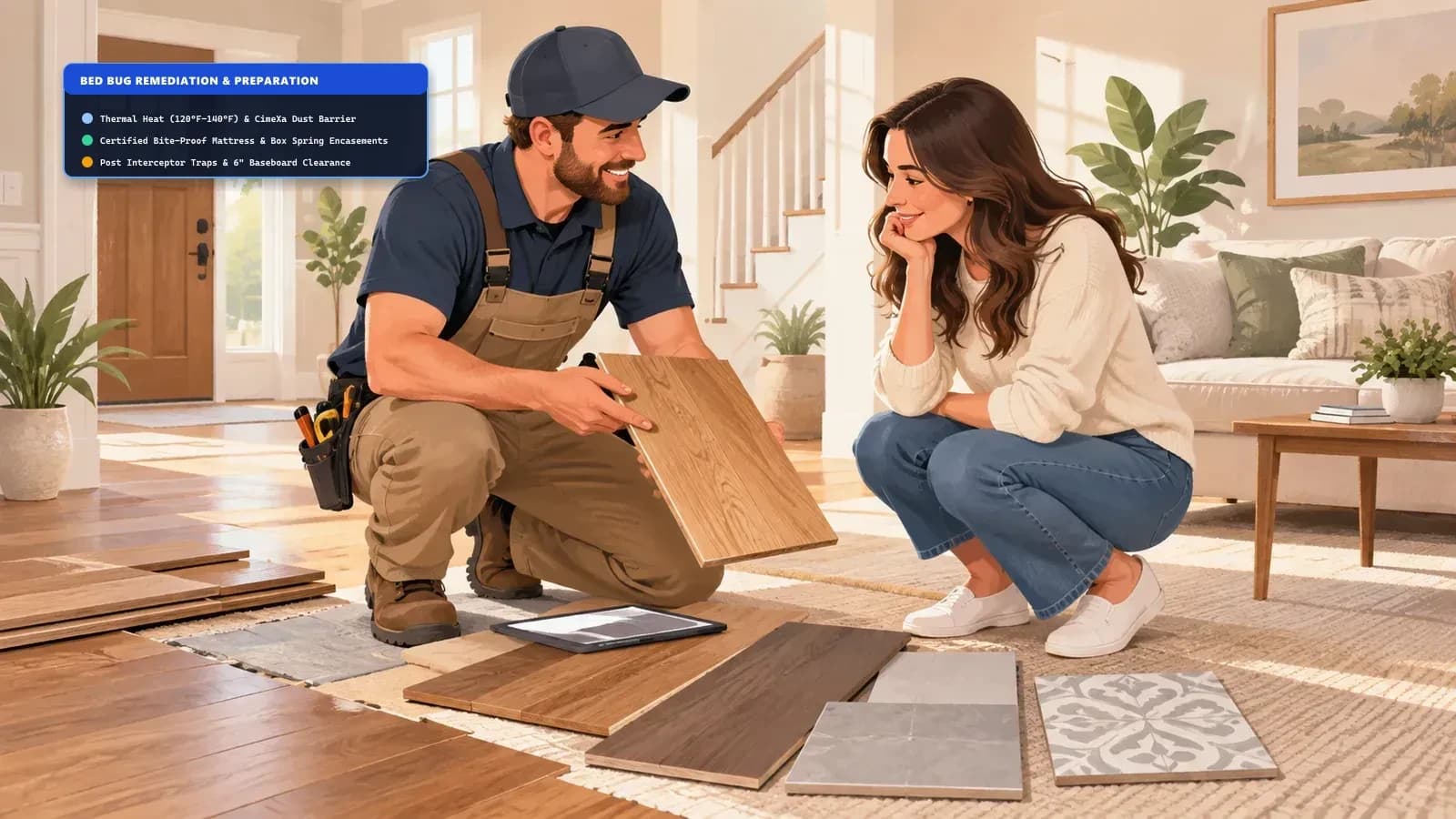
Install laboratory-certified Bed Bug Proof Mattress and Box Spring Encasements on all beds immediately following initial treatment. Ensure the encasement features a micro-zipper tooth design and hook-seal locking teeth. Once installed, never remove the encasement for at least 12 months; any trapped bed bug inside will starve and die.
3. Interactive Visit Preparation Tool
Use our interactive preparation tool below to generate a tailored preparation checklist for your upcoming visit, track completed tasks, and print instructions for your family.
Build your visit preparation checklist
Make a checklist of practical arrangements and questions to confirm with your company before the visit.
No account needed. This tool does not save or send your entries. Reset clears the form.
4. Post-Treatment Monitoring & Multi-Unit Defense
Eliminating the initial population is only half the battle; preventing re-infestation is vital, especially in multi-family apartments or condominiums where bugs migrate through wall outlets and plumbing chases:
- Bed Bug Interceptor Cups: Install plastic dual-well interceptor traps under all four legs of your bed frame. The outer well allows bugs to climb up, while the slick inner well traps them, providing instant visual verification if bugs attempt to climb your bed.
- Keep Bedding Off the Floor: Pull beds 6 inches away from walls. Ensure blankets, comforters, and dust ruffles never touch the floor, eliminating fabric bridges.
- Multi-Unit Containment: In apartments, insist that building management inspect all four units immediately adjacent to yours (above, below, left, and right). Treating a single infested unit without inspecting adjacent units guarantees re-infestation within 90 days.
5. Scientific References & Health Standards
Remediation standards and thermal mortality thresholds reviewed October 2026. Authoritative sources:
- EPA Bed Bug Guidance & Management Protocols — Joint EPA and CDC statement on bed bug control in residences.
- CDC Bed Bug Information & Public Health Standards — Health guidance on skin infections, secondary allergens, and sanitation.
- NPMA Bed Bug Best Management Practices (BMPs) — Professional trade association technical guidelines for heat and chemical remediation.
To compare contractor estimates for bed bug work, consult how to compare pest control quotes. For emergency steps to take tonight, read our emergency infestation action plan. For general credential vetting, see how to choose a licensed pest control operator. Find certified bed bug specialists on our pest directory map.