
1. The Devastating Cost of Non-Billable Windshield Time
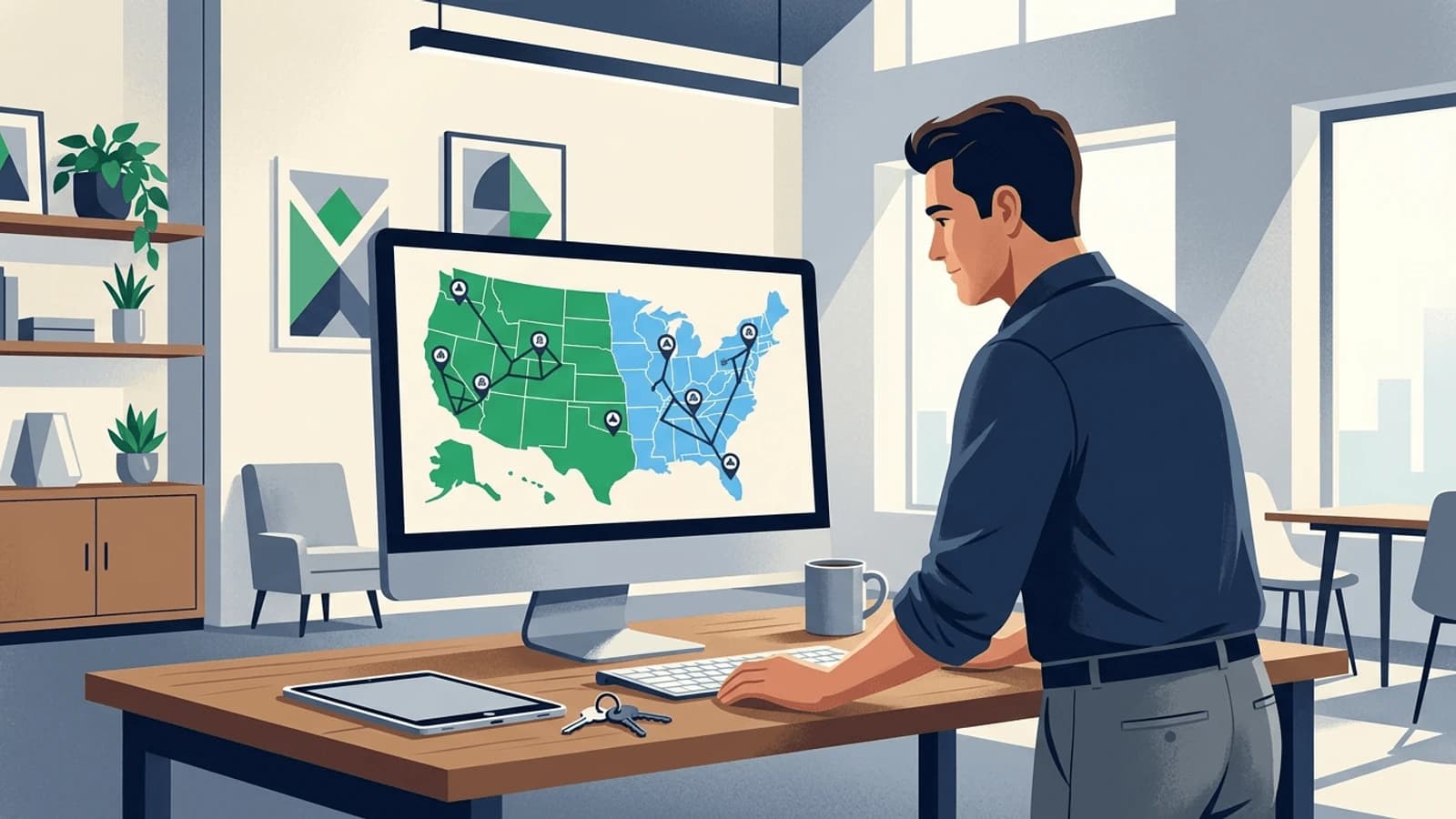
In route-based pest management, the single largest drag on net profit is unbillable transit time ('windshield time'). A technician sitting in highway gridlock produces zero billable revenue while consuming fuel, causing vehicle wear, and exhausting their federally regulated DOT driving hours.
Consider an operator whose technicians average 22 minutes of transit time between stops. Across a standard 8-stop day, that technician spends 176 minutes (nearly 3 hours) behind the wheel, completing only 8 stops. By implementing strict geographic clustering, inter-stop transit drops to 7 to 9 minutes. This instantly frees up 90 to 110 minutes of operational time per day, unlocking 2 to 3 additional billable stops without increasing technician overtime.
| Operating Metric | Dispersed Route (Unoptimized) | Clustered Route (Optimized) | Net Variance / Impact |
|---|---|---|---|
| Average Transit Time Between Stops | 22 – 28 minutes | 7 – 10 minutes | -15 to -18 mins / stop |
| Daily Windshield Driving Time | 3.2 hours | 1.2 hours | -2.0 hours unbillable travel |
| Completed Stops per 8-Hour Shift | 6 – 7 stops | 10 – 12 stops | +4 to +5 stops daily |
| Fuel & Vehicle Wear Cost / Day | $48.00 / vehicle | $22.00 / vehicle | -54% fleet operating cost |
| Average Daily Gross Revenue | $420.00 | $680.00 | +$260.00 / day (+61%) |
| Annual Gross Revenue (250 Days) | $105,000.00 | $170,000.00 | +$65,000.00 per truck |
The Micro-Economics of 2 Additional Daily Stops
The financial leverage of route density is extraordinary. Two additional residential stops per day (billed at an average recurring rate of $55.00/stop) generates:
**$110.00 extra revenue per day * 21 operating days = $2,310.00 per month per route.**
Across a modest 5-truck fleet, optimizing route density adds $138,600.00 in high-margin gross revenue annually with zero increase in fleet size or fixed overhead.
2. Geographic Density Clustering and Micro-Zoning
Achieving high route density requires abandoning customer-dictated appointment scheduling. When a customer demands a specific Tuesday 2:00 PM appointment on the opposite side of the county, accommodating them destroys route profitability. Operators must transition to Zonal Cluster Scheduling.
The 4-Quadrant Micro-Zone Architecture
Divide your primary service territory into distinct geographic micro-zones based on natural highway corridors, zip code boundaries, or municipal borders (e.g., Zone A: Northeast; Zone B: Northwest; Zone C: Southeast; Zone D: Southwest).
- Dedicated Service Days: Assign recurring residential routes to dedicated service days. Zone A accounts are serviced exclusively on the 1st and 3rd Mondays; Zone B accounts on 1st and 3rd Tuesdays.
- Exterior Perimeter Defense Advantage: Because residential maintenance focuses on exterior perimeter barrier maintenance (liquid barrier, weep hole check, rodent bait box servicing), the customer does not need to be home. This allows uninterrupted sequential neighborhood routing without appointment arrival window delays.
- Tight Inter-Stop Radius: Technicians park their service vehicle once on a residential cul-de-sac and service 3 to 4 adjacent homes sequentially with an electric backpack sprayer, eliminating vehicle starts entirely.
3. Service Territory Drive-Time Rings and Trip Surcharges
Establish strict concentric drive-time rings radiating from your central branch or technician home base. Pricing and service availability must reflect travel distance:
- Primary Core Ring (0 – 15 Minutes): Standard flat-rate pricing. Target 70%+ gross margin. All marketing spend (Google Local Services Ads, SEO, direct mail) should be concentrated within this boundary.
- Secondary Ring (15 – 30 Minutes): Standard flat rate with an enforced minimum account value (e.g., no standalone stops under $165.00). Must be bundled into specific bi-weekly batch days.
- Tertiary Fringe Ring (30 – 45 Minutes): Mandatory $45.00–$65.00 trip surcharge unless the customer is part of an active commercial contract or neighborhood cluster with 3+ pre-committed accounts.
- Out-of-Territory (> 45 Minutes): Politely decline service or refer to vetted partner companies via our pest directory map. Servicing remote accounts is a leading cause of technician burnout and vehicle depreciation.
4. Managing Weather Delays, Callbacks & Dynamic Dispatch
Exterior pest control routing is highly vulnerable to adverse meteorological events (precipitation washing away fresh liquid barrier applications, high winds causing spray drift). Operators need a structured contingency protocol:
- Rain-Day Pivot (Interior Conversions): When rainfall prevents exterior liquid applications, immediately convert the route to scheduled interior inspections, attic rodent inspections, crawlspace moisture checks, and commercial kitchen cleanouts rather than cancelling technician shifts.
- Dynamic Route Re-Optimization: Utilize routing algorithms that re-sequence stops in real-time when a customer reschedules or cancels, rather than forcing the technician to drive past skipped addresses.
- Callback Buffer Windows: Reserve two 45-minute slots on Thursday and Friday afternoons exclusively for re-treatment callbacks. Never insert unscheduled callbacks into dense morning routes.
5. Routing References & Operational Tools
Logistical benchmarks and fleet telemetry data reviewed October 2026. Consult these operational references:
- Department of Transportation (DOT) Commercial Fleet Guidelines — Hours of service regulations and vehicle inspection standards.
- NPMA Fleet & Operations Management Guides — Route scheduling software benchmarks and territory management studies.
For business financial modeling, explore our flat-rate pricing architecture or review technician inspection standards in termite barrier chemistry. Homeowners can learn about service expectations in how to choose a pest control company.